


Sleeping while Bikepacking: Tips for a good night outdoors (A female-focused guide)
15/05/2026
In this article:
- Unique challenges women may face while sleeping outdoors
- Choosing the right sleeping setup while bikepacking
- Finding the right campsite: safety and comfort first
- Evening routine: stability while being on the road
- Body awareness: cycle, comfort, and sleep quality
- Strategies for better sleep outdoors
- Common mistakes in bikepacking sleep setups
1. Unique challenges women may face while sleeping outdoors
Safety is of course a major concern, but it's not the only one.
Women often need more sleep, tend to be more vigilant during the night (which increases mental load), and experience hormonal fluctuations that can significantly affect sleep quality. Physiologically, many women also get cold more easily.
I've observed my boyfriend sleeping directly on the ground without a mattress or tent and waking up fully recovered. In contrast, I personally need much more comfort and rest to feel fully restored in the morning.
Hygiene and practical aspects, like simply getting up to pee at night or menstruating, also make choosing a safe, non-exposed campsite more important.
2. Choosing the right sleeping setup while bikepacking
Sleeping bag
Sleeping bag temperature ratings are standardized, but honestly, I've never found them to be fully accurate. Even at the "comfort" rating, I often don't feel truly warm, while my boyfriend might be sweating in the same conditions. My advice: don't rely entirely on ratings, especially if you haven't tested the bag before.
I generally recommend a down sleeping bag, as it is lighter, more compact, and highly insulating. A key factor here is the fill power (cuin value). The higher the cuin value, the more air the down can trap relative to its weight, making it warmer. If you tend to get cold, invest in a high-quality sleeping bag. An additional liner can also add warmth and increase comfort against the skin.
I personally use a wider, more flexible sleeping bag (Nordisk Voyage 300), because I'm a side sleeper and feel restricted in narrow bags. It works well for me down to about 5°C. I feel most comfortable around 10°C. During a winter bikepacking trip with night temperatures around −10°C, I used a sleeping bag rated to −18°C, yet still felt freezing cold, mainly because I used the wrong sleeping mat.
Sleeping pad / mattress
When I started bikepacking, I used a cheap inflatable mattress, thinking it wouldn't make much difference. I quickly learned otherwise. Not only did it get holes all the time, but it was also so thin that I constantly felt cold. I didn't yet know about the so-called R-value.
The R-value indicates the level of insulation and it makes a huge difference, since most of the cold comes from below. I highly recommend investing in a mat with an R-value of ideally above 5. I think this would have saved me many sleepless, cold nights.
I've recently upgraded to a wider, thicker model (Nemo Tensor™ All-Season Ultralight Insulated Sleeping Pad), and I honestly regret not doing it earlier. I now sleep like a baby because it's so comfortable.
Pillow
I personally bring a small inflatable pillow, as it makes a big difference in comfort. Of course, you can also use your bags, clothes, or even a water bottle as a pillow (credit to my boyfriend for that - I couldn't do it!). For me, the pillow is a luxury item, but I value it because I don't want to wake up with neck pain.
Tent or bivy
I love the comfort and privacy of my small one-person tent. It immediately makes me feel more protected and cozy, and of course offers privacy. I've also slept without a tent a few nights, either with someone else by my side or in places where I felt completely safe. It took some getting used to, but it can also feel magical.
Still, I don't think you need to be overly "adventurous" by default. A tent adds a huge amount of comfort. It's better to have one than not, especially in changing weather conditions. It also adds some extra warmth.
3. Finding the right campsite: safety and comfort first
For more detailed tips on wild camping, check out: How to find the best wild camping spots while solo bikepacking or touring as a woman.
When choosing a campsite, I trust my intuition. Does the place feel safe and good, or not? If something doesn't feel right, I move on.
I prefer spots that are protected on at least one or two sides, for example, near a wall, rock, or large tree. While this doesn't necessarily increase actual safety, it significantly improves my sense of comfort.
In nature, I generally don't feel unsafe, but being alone in the dark can still feel uncomfortable. Anything that helps you feel more at ease is valid.
4. Evening routine: stability while being on the road
When bikepacking solo, I usually start looking for a campsite at least two hours before sunset. In more busy or touristy areas, I sometimes wait a bit longer until things quiet down.
Once I've found a spot, I quickly set up my tent and gear. After everything is ready, I either take a dip in nearby water or do a wet-wipe shower, then change into warm, dry clothes.
In colder conditions, a hat helps retain heat significantly.
After dinner, I usually get into my sleeping bag early and listen to a downloaded podcast to fall asleep. It helps distract me from outside noises and creates a sense of comfort.
Whatever the routine is, I've found that consistency adds a lot of comfort and safety, even while traveling.
When it gets dark, I usually just go to bed and enjoy a long night's sleep. If sunrise is late and sunset early, I fully embrace it - the more sleep while bikepacking, the better, in my opinion.
5. Body awareness: cycle, comfort, and sleep quality
As a menstruating person, your cycle can significantly affect sleep quality.
I personally feel more tired in the second half of my cycle, while sleep tends to be more restless just before my period. It's important to get to know your body and adapt accordingly.
During menstruation, you may feel colder and need more rest overall. Getting up at night to change hygiene products is also part of it. I use a cup or menstrual disc.
For more tips, check out: Bikepacking and vaginal health: Top tips for comfortable multi-day rides.
Most importantly: Be kind to yourself. If you feel more comfortable staying at a campsite with showers or even booking accommodation, that is completely valid.
6. Strategies for better sleep outdoors
In the beginning, I found sleeping outdoors alone quite challenging. Every small sound made me restless, my heart would race, and I was extremely alert to everything around me.
Even though I logically knew there was no real danger, my body stayed in a survival mode.
I eventually discovered that earplugs help me a lot. While it might seem counterintuitive ("what if I don't hear danger?"), I've found the opposite to be true. I still wake up immediately if something unusual happens, but earplugs block out minor noises that otherwise keep me alert.
It feels like the body adapts to outdoor sleeping over time and naturally responds to real threats.
When I feel too nervous, I also use podcasts or simple breathing techniques. And above all, practice helps. The more you do it, the more "wild" becomes normal and sleeping outside can become one of the most liberating experiences.
7. Common mistakes in bikepacking sleep setups
As mentioned earlier, don't underestimate nighttime temperatures. Even if you feel fine when going to bed, temperatures can drop quickly, and your body cools down during rest. Humidity at night can also make things feel much colder.
Make sure to layer your clothing and keep warm items within reach so you can adjust quickly during the night. It's better not to wait too long, once you're cold, it's hard to warm up again.
Avoid going to bed wet or sweaty, as this increases heat loss.
Also, don't choose your sleeping spot in a rush. Always allow extra time in case your first option doesn't work out.
Even if you don't feel very hungry, make sure to eat enough before bed. Waking up hungry is unpleasant and can affect recovery.
Hydration is important, but be mindful that drinking a lot before sleep may lead to nighttime wake-ups. That said, it still happens to me regularly, so keep your headlamp within reach if that's you too.
Sleep is not a luxury while bikepacking, but a crucial factor for wellbeing, strength, and feeling balanced and recovered, especially as a menstruating person with a fluctuating hormonal state.
If you don't feel comfortable sleeping outdoors yet, don't be discouraged. It gets easier the more you do it!
I hope these tips help you on your next adventure on the road.
Happy riding!
Franziska
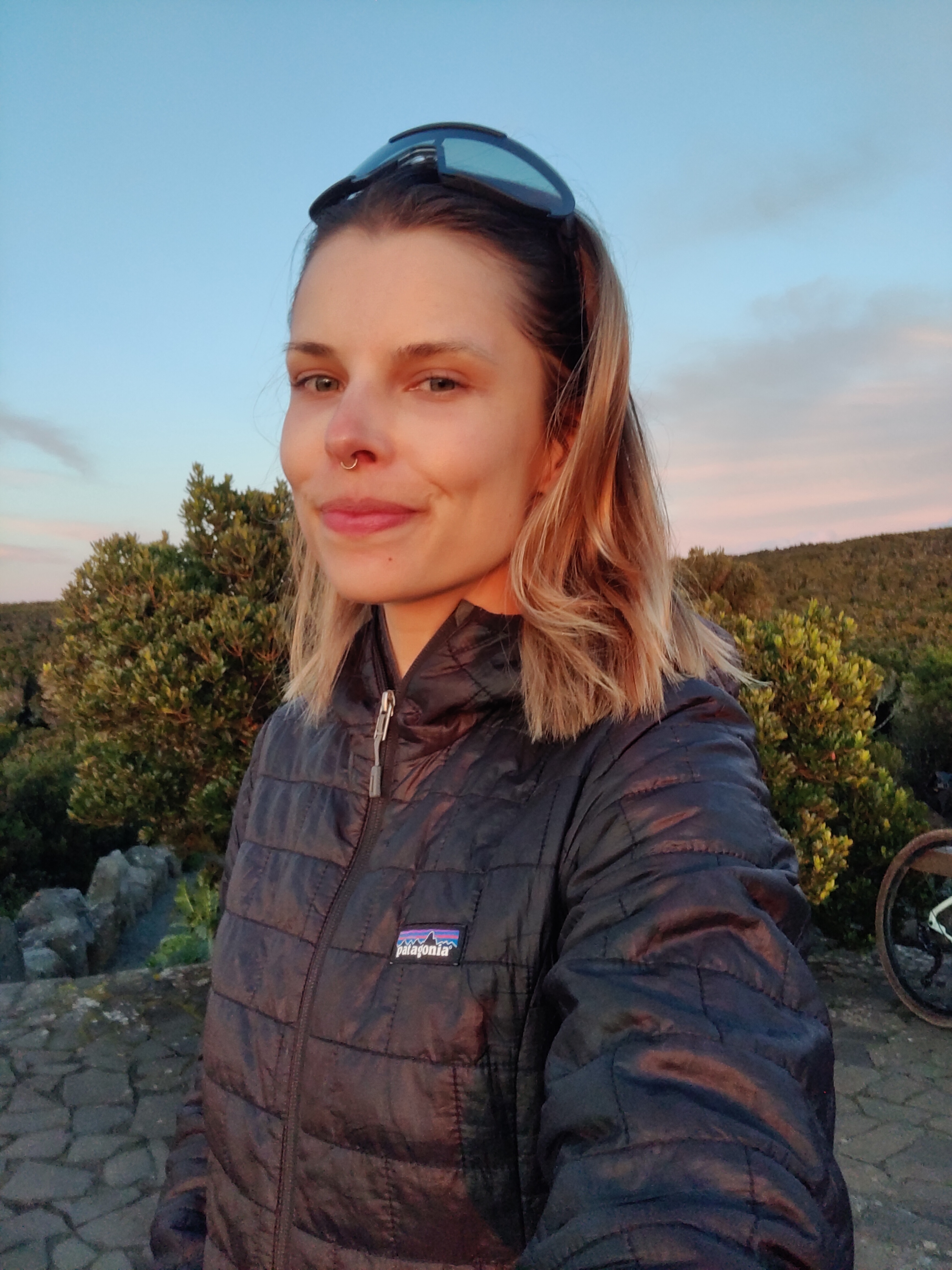
Franziska