


What I learned cycling as a woman through cultures different from my own
19/05/2026
In this article:
1. The road is never yours alone
It's something you share with others. And as much as I loved connecting with locals and fellow travellers, I also deeply cherished my solitude. But after crossing the border into Turkey, I soon realized I had to let go of that very valued alone time and shift my mindset toward sharing the journey with curious locals almost constantly.
In the beginning, I often felt overwhelmed by all the attention: the conversations, questions, photos being taken, invitations into people's homes, offers of food, rides, and endless hospitality. It felt so far removed from my own reality. Slowly, I began to lean into it more and more, as I was a guest and I was here to learn and experience their culture.
2. Lean into it and surrender
So, I decided it was time to let go of planning and allow destiny to shape the rhythm of my days by saying "yes" more often and to lean into it. Yes to eating together, yes to staying in someone's home, yes to the beds and rides that were offered genuinely. Sometimes that meant I didn't cycle a single kilometer in a day.
But what I received in return was far more important and valuable. I started to feel deeply connected to the country, the culture, and most importantly, the people.
I shared deeply meaningful moments with people I had only just met, because somehow we both happened to be there, in that exact place, brought together by chance in our most honest and human forms.
And so friendships were formed through simply living together in those moments. Religion, beliefs, norms, values, life philosophy, wealth or lack of it, and even language, no matter how different we were, all of these constructs seemed to fade into the background in these encounters. In those interactions, they no longer felt significant or defining.
What remained was our shared human form: something every person has in common, the desire to help, curiosity, and the need to connect.
Some of those encounters will stay with me forever. They taught me to let go of judgement and assumptions, and that real connection happens through shared experiences, openness, and reciprocity.
3. "Are you Muslim?" and "Where is your husband?"
And then, just as quickly as those moments of pure human connection appeared, the reality is that every day social conditioning would reappear too, often in the form of very direct questions like: "Are you Muslim?" and "Where is your husband?"
"Are you Muslim?"
And whenever I answered that I wasn't, the most common response I received was: "That doesn't matter, it's all the same."
It showed me that even though religion is often seen as a central and deeply defining part of life in these cultures, I was still accepted as a non-Muslim, even in deeply holy places such as Medina.
"Where is your husband?"
This question was asked almost everywhere I went. And whenever I answered that I was travelling alone, it often brought confusion. Not necessarily in a negative way, but more in the sense of something people simply had never seen before.
And that is okay. There are cultural differences, and in many places it is highly unusual for a woman to travel by herself. That is simply a fact and part of those differences.
What stood out most to me was not the question itself, but the consistency of it. It showed how deeply traditional role patterns are still woven into everyday life.
To be honest, it is not up to me to interpret exactly what was going on in each person's mind in those encounters. What I can say, based on my experience, is that the reaction was almost always confusion rather than judgement, a genuine, sometimes even funny, surprise at something unfamiliar for them.
4. How visibility shapes perceptions of solo female travel
And I don't see that confusion as something negative. In many ways, it made me realise something much more important: how essential it is to show that a woman can travel alone. In whatever form that takes.
Because it made me see how powerful visibility is. That simply by existing in these spaces, as a woman alone, you can slowly shift what people consider "normal." Not by forcing a message, but by being there. And that is what stayed with me most: not resistance, but curiosity and the deep realisation of how important it is that we keep showing this to the world, so that it becomes less and less unusual over time.
And this feeling applies to everywhere I have travelled. Once in Europe, I was harassed by a man. Shortly after, I happened to pass a police car with four male officers inside, and I decided to inform them about what had just happened. After I finished my story, one of them said: "So what did you learn from this? That you should not travel or cycle alone as a woman."
I could hardly believe what I was hearing. I gave them a full ten-minute speech, explaining how absurd it is to suggest that a woman should lock herself away and stop travelling because a small percentage of men don't know how to behave themselves. After my "lecture," they were left speechless. They then asked me where it had happened and said they would look into it.
5. Food as culture and connection
On the bike, I often viewed food as something practical: efficient, quick, and if I was lucky, nutritious. But in these cultures, food is a social experience. It is something to share, something that brings people together, something that sits at the center of human connection. From drinking countless glasses of çay with strangers to being invited into someone's home for a full three-course dinner, food became one of the purest expressions of generosity and community I experienced on the road.
I once asked a family in the Balkans if I could camp in their driveway for the night. Instead, they invited me inside because they were celebrating a Name Day in the Eastern Orthodox Church tradition.
After the women of the house re-dressed me, because my cycling clothes were a little too dirty and smelly for the occasion, I walked into what felt like the longest table in the world, filled with endless food and surrounded by more than forty beautifully dressed family members.
I was told to eat whatever I wanted, and honestly, I had never seen that much food in my life.
6. Final reflections
Through this journey I learned to accept help when it is offered freely whether that meant rides, food, invitations, or support, even though my instinct was to do everything on my own. I learned to let go of strict planning and allow the rhythm of the days to unfold more naturally by saying "yes" more often, becoming more flexible and open to what each moment brings.
Some of my encounters on the road will stay with me forever. They taught me to let go of judgement and assumptions, and to understand that real connection happens through shared experiences, openness, and reciprocity. From drinking countless glasses of çay with strangers to being invited into homes for full meals, food became one of the purest expressions of generosity and human connection I experienced on the road.
It also showed me that even though religion is often seen as a central and deeply defining part of life in these cultures, I was still accepted as a non-Muslim.
And in many ways, this journey made me realise something even more important: how essential it is to show that a woman can travel alone. Because visibility matters. Simply by existing in these spaces as a woman on her own, you can slowly shift what is considered "normal" not by forcing a message, but by simply being there.
That is what stayed with me most: not resistance, but curiosity, openness, and the deep realisation of how important it is that we continue to show this to the world, so that solo female travel becomes less and less unusual over time.
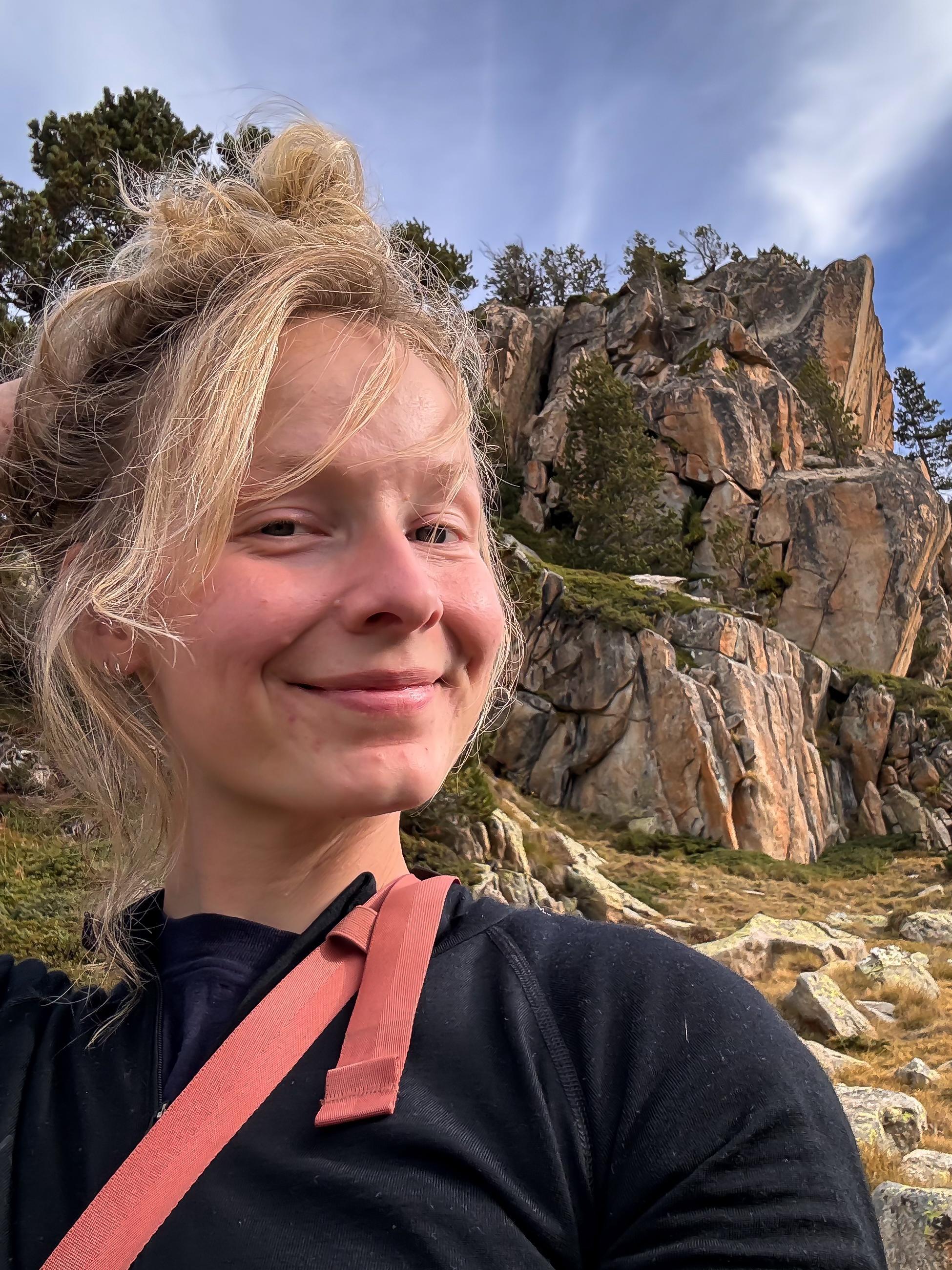
Naomi