


Cycling through Afghanistan as a woman
06/09/2026
In this article:
1. Trying to disappear
Once me and my partner crossed the border at Shir Khan Bandar, from Tajikistan, we received our visa on arrival. The Taliban officials we met were very friendly. They asked my partner many questions, especially about our marriage, which we had to pretend was real.
Once in, I was 'trying to disappear' and cycling made this particularly interesting.
I always covered my arms and legs, wore loose clothing and a headscarf. In the first city, I bought a man's traditional outfit, very similar to the one my partner bought. With my helmet on, I could pass as a man while cycling.
There was also a very practical reason for this. Traditional women's clothing is long and loose, and cycling in it would have been potentially dangerous.
Interestingly, this was also something the Taliban officials at the border advised us about. They warned us that people in rural areas might react badly to seeing a woman cycling.
In reality, we found almost the opposite.
Some of the warmest interactions we had were in remote villages. People would stop what they were doing, smile, ask questions and invite us for tea or lunch. Once they realised I was a woman, there was usually no hostility. Mostly, there was curiosity.
2. Speaking through someone else
Whenever someone wanted to ask us something, they would almost always speak to my partner first and only then, maybe, to me.
It depended on the person, their age and where we were. Young men, in particular, were much more spontaneous and often had no problem talking directly to me. In towns, villages or markets, we could stop outside a shop and within a few minutes find ourselves surrounded by twenty or thirty men.
They were curious. They wanted to know where we came from, where we were going, why we were travelling by bicycle and where we were sleeping.
But they almost always spoke to Simone. Even when the questions were about me.
"What is your wife's name?" "Where is she from?" "Do you have children?"
Something as simple as communicating with other people depended on my partner. He had to manage the conversation, answer questions and speak on my behalf. For him, this was not easy either. He felt overwhelmed by the constant attention and, at the same time, responsible for my safety.
3. Different women, different Afghanistans
One of the things that surprised me most was how different the experience could be from one region to another.
In Bamyan region and areas where the Hazara population is predominant, the atmosphere felt much more relaxed. The Hazara are a Shia minority who have been discriminated against and persecuted for their ethnic and religious identity. In these areas, we found a society that seemed more open to women being present in public and to girls receiving an education. We saw more women outside, more women without their faces covered, and I was approached more naturally.
Young women sometimes stopped me to take photos together and wanted to exchange Instagram accounts. They were curious about my life, my travels and where I came from.
In other, more conservative areas, the difference was striking. Women were rarely visible in public. Many wore burqas and were accompanied by a man. They generally did not interact with anyone other than him.
Sometimes, when I greeted a woman, she would turn her face away. In one village, a group of women actually told me to leave because I was not covering my face.
The same was with girls. In some places they would smile, wave and be incredibly curious. In others, they would barely look at me.
It was difficult to understand how much depended on religion, how much on tradition, and how much on the family and the local community. In some Hazara villages, we met women who still worked as midwives. In Bamyan, one woman worked in a pharmacy. In one family who hosted us, the mother, a former teacher, was still teaching her daughters at home.
4. The privilege of being a foreign woman
The strangest thing was that I never really felt afraid of cycling in Afghanistan. And I realised what a huge privilege that was.
I had a European passport, I was travelling with a man and, most importantly, I knew that I could leave the country whenever I wanted.
While I was cycling past, I would sometimes see women in burqas struggling to walk because they could barely see through the mesh in front of their eyes.
In a SIM card shop, there was a separate waiting room for women. Women were not allowed to carry out the transaction themselves. A man had to do it for them.
We saw separate areas for women in restaurants and other public places. They were presented as spaces for women, but we saw them as another way of keeping women apart from public life.
We also spoke to young Afghan men who told us how ashamed and frustrated they felt that their sisters or daughters could no longer study or work.
One experience at Band-e Amir was particularly difficult to process. An older Taliban member started hitting a group of women, including a little girl, with a whip because the man accompanying them had walked about twenty metres away.
5. Entering the women's world
Travelling as a couple gave us access to something a man travelling alone simply cannot have in Afghanistan: the world of women.
When a family hosted us, sometimes Simone stayed with the men while I stayed with the women. More rarely, we were all together.
These were the moments I looked forward to the most.
The women welcomed me with incredible warmth. They wanted to brush my hair, put henna on my hands and sometimes even do my make-up.
They went through the photographs on my phone one by one. They wanted to know who the people were, where the places were and, above all, why I had so many pictures of myself cycling, climbing and skiing.
For them, these were completely crazy activities.
How do you explain to an Afghan girl that in my country I can simply decide to go skiing or climbing, when she cannot even freely decide whether to leave the house?
We spoke a little English, but mostly through a translation app. Somehow, we often understood each other quite well.
One young woman we met had recently married and moved from Kabul to a tiny village. She told me how lonely she felt after leaving the city.
In another family, there were six daughters between about fourteen and twenty-five years old. They were funny, curious and full of questions.
They told us what they wanted to become: doctors, lawyers, midwives, artists.
It was strange to hear such ordinary dreams in a place where so many of them had suddenly become almost impossible.
6. The Canyon Route
The part of Afghanistan where I felt most comfortable was also the most remote.
We cycled 400 kilometres along the Canyon Route, from Bamyan towards Mazar-i-Sharif, following the Balkh River.
Life there is still very simple. People use donkeys as a means of transport, grow small vegetable gardens and potato fields, and keep a few cows or sheep. Children work in the fields instead of going to school.
For fifty kilometres we did not see a single small shop. One man gave us some bread to take with us.
Women were part of everyday life here too. We saw them working in the fields, leading donkeys or walking through the villages.
Some smiled and came to greet us. Others covered their faces with a cloth when they saw us coming.
We also saw women in burqas travelling on donkeys.
Life there is hard and there is a lot of poverty, but it is also still deeply connected to the land. And after spending so much time in crowded places, cycling for days through the mountains and meeting only a few people at a time felt completely different.
7. What remains
I entered Afghanistan with a lot of questions about what it would be like to be a woman there. I left with even more. But I am glad we came by bicycle.
Travelling slowly gave us time to stop when someone called us from the road, accept a cup of tea, enter a house or talk to someone we would otherwise have simply passed by. And that was how we met the women who became such an important part of this journey. After this travel, I no longer take for granted the simple freedom of getting on my bicycle and deciding where to go.
Happy riding!
Chiara
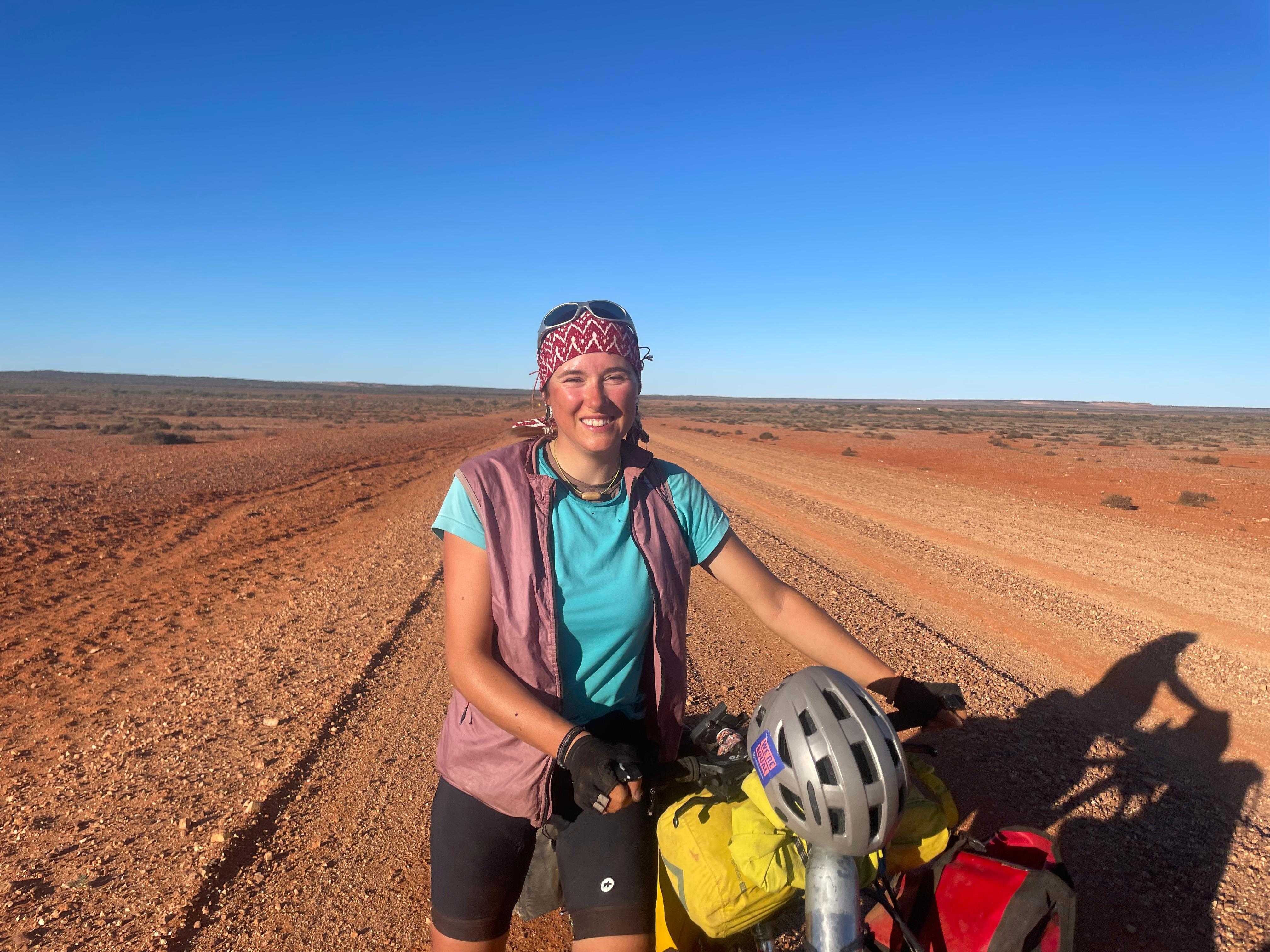
Chiara