


How bikepacking taught me to handle discomfort, uncertainty and stress
08/06/2026
In this article:
1. Bikepacking constantly puts you into uncertainty
Uncertainty is, in my opinion, the state that scares most people in this world the most. Of course, humans love certainty. Certainty equals safety somehow, and safety is what our primal brain seeks. Because certainty = safety = survival.
Nowadays, our general level of safety is much higher than it has ever been, which might make uncertainty feel even more threatening. We can pre-plan almost everything, we have access to the whole world in our hands, and we can buy the best gear ever developed to withstand almost any possible situation.
I'm speaking from my personal experience and observation (I'm sure there are studies on this too), but I do observe myself and others becoming more controlling in uncertain situations. Remember COVID times? People stocked up on toilet paper like crazy. Was it really necessary? I don't think so. But it gave a sense of control in a situation that was as uncertain as it gets.
Of course, I do value safety and security, but I have found myself becoming much more open to uncertainty in recent years, and this development is deeply linked to starting bikepacking a couple of years ago. Let me tell you why.
Nothing in life is certain (well, except for a few things, of course). This realization can be hard to accept. That said, people with higher emotional intelligence and greater openness to experience are more likely to deal well with uncertainty, at least that's what science says. As for myself, I have always had a strong tendency toward seeking new experiences. And while I am afraid of many things too, I still try to challenge myself and face them.
What I realized after a couple of bikepacking trips, is that: you can plan your route and everything ahead, but things will still turn out differently than expected. When I started bikepacking, I had an apartment, a routine job, a stable income, and a more or less "regular life" with little external insecurity. Of course, my internal insecurity was still there, but probably because of the stability in my life, I sought the opposite and didn't put much planning into the trip. I just made a rough plan, packed what I thought I'd need (spoiler: it was too much, of course), and set off. How liberating this was!
Where will I sleep tonight? Will I find a good camp spot (if you actually want to learn more about how to find the best camp spot check out How to find the best wild camping spots while solo bikepacking or touring as a woman)? Where will I get food and water? What do I do if I have a mechanical issue? Oh, you can always use the Rolling Around app with thousands of waypoints, for a bit less uncertainty on your trip! ;-)
While being a very organized person in daily life, all these questions slowly started to vanish, and I simply set off, realizing that the beauty of it is that you will have to see what happens anyway. I quickly realized that no matter what happens, I will somehow find a solution. Bikepacking taught me that uncertainty is survivable and even enjoyable.
Of course, there were days where I tightly tried to plan everything ahead, but overall, the experience taught me so much about life. Sometimes the best things happen when you just head out and are open to what you will experience.
2. The realization that most discomfort is temporary
While writing this article, I am very aware of the privileged position I am in to be able to intentionally seek discomfort as a contrast to a safe and stable life. I am aware that many people in this world do not have this privilege of choice, the privilege to choose discomfort for self-development, adventure, or simply experience. If you have this privilege too, please use it wisely and responsibly.
We usually try to avoid discomfort in our everyday lives and live in a world of extraordinary comfort (I grew up in Germany). Nowadays, I sometimes smile about Germans, as they often have clothing for every slightly different weather situation, leaving nothing to chance and not tolerating even a small amount of discomfort. I used to be like this too (and sometimes still are - you can't get the German out of me fully!). It might get cold? Let's take a spare jacket. It might rain? Let's take an umbrella.
Now I feel much more resilient to temperature and weather changes than I used to. Whenever we feel discomfort in daily life, we try to eliminate it as quickly as possible. While bikepacking, you often can't.
I remember a situation cycling through Lesotho with my boyfriend. We knew big thunderstorms were coming, but we had no option other than continuing. We knew there would be no shelter, accommodation, or anything nearby, but we had to keep moving. So we did.
The thunderstorms rolled in quickly, and we ended up in the most torrential rain I have ever experienced. Pouring rain and hail started hitting us hard. I was soaked to the bone within minutes, and the dirt road I was pushing my bike up turned into a stream of mud, burying my shoes and making it almost impossible to walk. No chance of a shower or a warm hotel bed that day.
I didn't think much in that situation, to be honest, I just surrendered. I didn't even feel discomfort. It just felt "normal." It felt like: okay, this is the situation. I am wet, I am cold, I cannot move my bicycle.
I only thought about the very next step: finding somewhere to seek shelter.
We eventually managed to drag our bikes up to a hut of a local shepherd, and he let us in. There we were: two wet and shivering white people, and the shepherd just staring at us, laughing. We spent an hour there shivering and hoping the rain would stop. Even if it did, the dirt tracks were now impassable.
While this would definitely have been a situation to panic about, we did nothing but wait. Later, a couple of teenagers joined the hut, and we asked if they might have a school building where we could sleep. They did.
Another hour later, I found myself warm, dry, happy, and excited in a classroom on top of a remote mountain in Lesotho. What a special experience and memory to never forget!
What started as extreme discomfort turned into the best situation we could have asked for under those circumstances. While one hour earlier I thought I would never feel warm again, life looked completely different just an hour later.
And that's the beauty of bikepacking: discomfort is temporary, can pass quickly, and might even turn into the best story of your trip.
3. Physical discomfort = mental calmness?
I have already addressed physical discomfort. And being confronted with this kind of discomfort has also done something to my mind. It gave me a sense of ease and definitely more calmness.
Of course, I still prefer a warm shower over a cold bucket bath, but knowing that discomfort is tolerable, will pass, and won't harm me has helped me build more resilience. Simply knowing that my body can handle it has helped me a lot.
I remember cycling up the Col du Galibier in sunshine and a shirt. I didn't even bring a wind jacket because I trusted the weather. It turned out that the entire long descent was covered in fog, freezing wind, and drizzle, and I have probably never felt colder.
However, I knew I could handle it and started my shivering descent, mentally detaching from the physical experience. A few years ago, I would have been in a bad mood, convinced I would get sick. But I didn't. I returned to my campervan, got warm, and woke up perfectly fine the next day, no sore throat, no cold.
Our bodies are much more capable and resilient than we think. And knowing this gives me more mental calmness and trust in life and also helps overthinking every situation.
4. How bikepacking brings you into presence
Presence (or mindfulness) is everywhere. You have probably heard that being present is one of the keys to happiness: not dwelling in the past, not worrying about the future, just being with whatever you are doing in this moment.
Unfortunately, our fast-paced modern life often does not allow us to simply be present. Rushing to work while thinking about to-do lists, groceries, food to prepare, workouts to do, and so on - our lives often feel like a browser with endless open tabs.
When was the last time you did something with full presence?
The magic of bikepacking is something I realized early on. While sitting on my bike, there is absolutely nothing but me and the bike. My surroundings, the sounds, the plants, the smells, the sensations in my body. Life becomes simple. All the open tabs? Closed.
The only things to think about are where to sleep and what to eat next. I love this simplicity more than anything else about bikepacking.
Even while pedaling, I cannot let my mind wander too far, especially off-road, as it would make me lose focus and potentially crash or slip. Fully focused on the bike, the route, the views.
Whenever I returned from a bikepacking trip, this simplicity and presence were what I missed the most. And I realized how much deeper and more profound memories become when you are truly there in the moment. While everyday life memories can feel blurry because we are often not fully present, bikepacking memories are intense, vivid, and clear.
I have had some of the most profound and life-changing experiences on bikepacking trips, and I am definitely ready to make more of them. Next to breathing exercises and other mindfulness practices, bikepacking is one of the most wholesome experiences for me and my mental health.
5. You don't need everything to feel “perfect”
Speaking of simplicity, this applies here as well. On the bike, you often do not have a choice. There might be no coffee, no proper breakfast, the weather might not be ideal and still, it could be the best day ever.
You will not have a wide choice of clothes for every condition, and you might not even see a shower for several days, but that is what you work with. And it works.
While the idea of not having a shower after a long day on the bike would have ruined my mood a few years ago, now even finding a water tap or a small stream feels like luxury. Small things become big luxuries and help shift focus back to what really matters.
Sometimes I still lose this perspective in everyday life, but once I am on the road, whatever I have is enough, and I find a way to make it work.
6. Trusting yourself more
Confidence did not come from feeling fearless. It came from repeatedly handling hard situations. And that is what bikepacking or cycle touring is, right? Headwind, rough conditions, an impassable road, a flat tire in the middle of nowhere, no food supply, running out of water, an unexpected hailstorm, no accommodation or proper wild camping spot, you will face it all. Sometimes even all in one day.
And then you realize: it is all manageable. There is always a solution. It might not be the perfect one, but it will be something, and you will be fine either way.
And this realization helped me gain a lot of trust in myself, my abilities, and in life in general. While this might sound cheesy, I genuinely believe that bikepacking is a great way to broaden our horizon, increase trust in ourselves and others, and build resilience.
7. Rest does matter
While writing all these words about resilience and strength, I have also learned the importance of rest. Strength, for me, does not mean pushing your body beyond its limits, but taking care of it and knowing when to rest.
Our body and mind are one system, and I strongly believe we should not work against our body, but with it. I have seen people pushing far beyond their limits out of a false sense of needing to prove themselves (to whom?), while actually risking long-term damage and avoiding a more uncomfortable truth.
I put a lot of effort into my health. I listen closely to my body, I nourish it well whenever possible, and I do not feel ashamed if something is too much.
This is also an important realization in bikepacking: there is no point in pushing beyond your limits while harming your body or doing something you do not feel aligned with.
While bikepacking in Laos, I struggled a lot with the hot and dusty conditions and experienced a bit of a crisis because I had come there to bikepack but did not feel like I could continue in that way. While it was difficult, I eventually accepted the situation, and we took many rest days and simply enjoyed it for what it was. On some sections, I took a boat while my partner tackled the grueling long tracks without support, and that was okay too.
There is nothing to be ashamed of, only a need to be realistic about what is achievable for me and what is not. And at that point, it simply was not for me, while another time it might have been. Life is dynamic, and it is perfectly fine that something does not work for you one day but does on another. Just listen to what you need.
Bikepacking did not remove stress from my life, but it taught me that I am capable of moving through it much better than I thought. It helped me trust life more, and also leave the conventional path of a fixed job and permanent place of living. It helped me build a more flexible life and realize I need much less than I think.
And you, what has it taught you?
Happy riding!
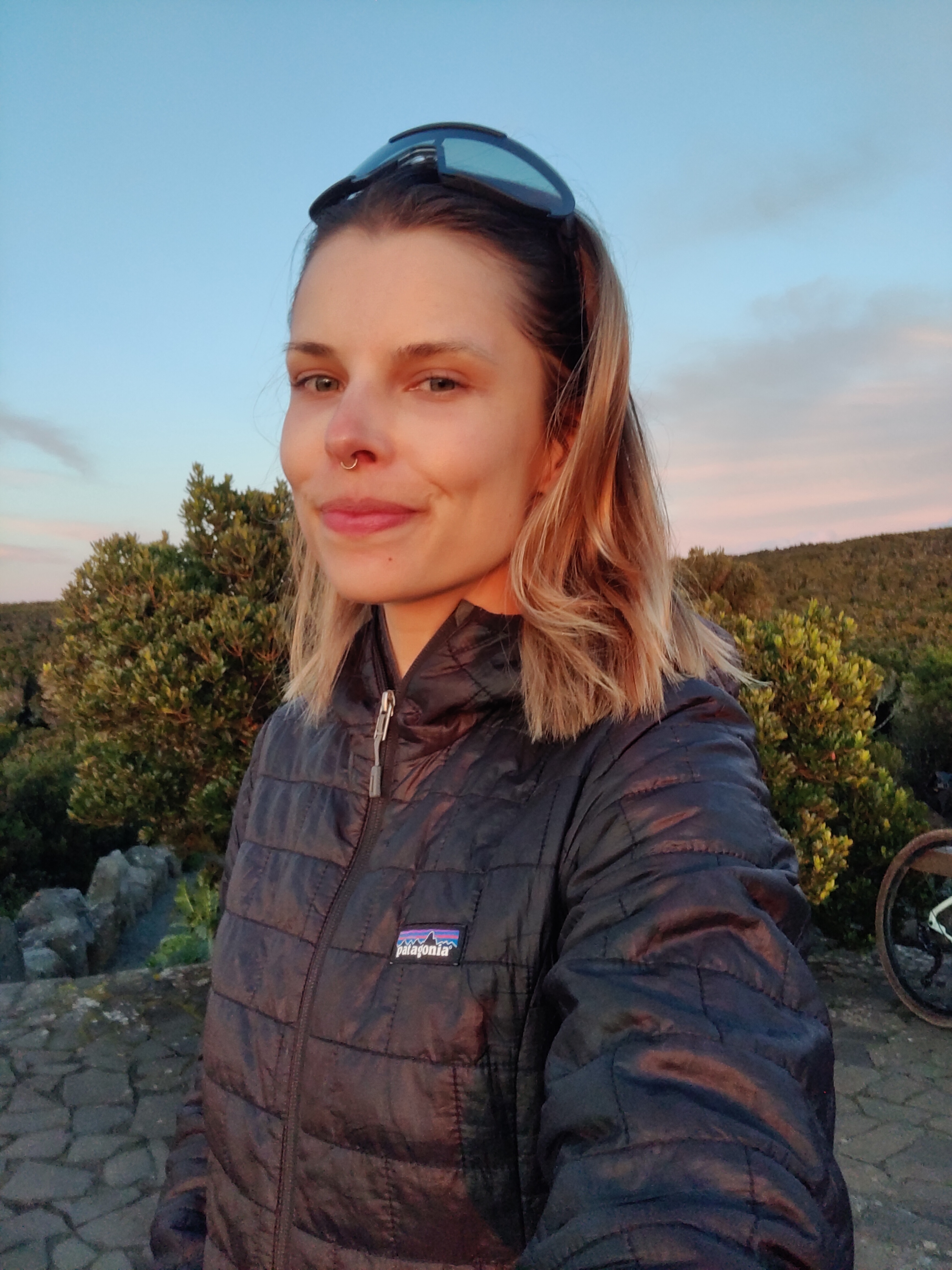
Franziska